


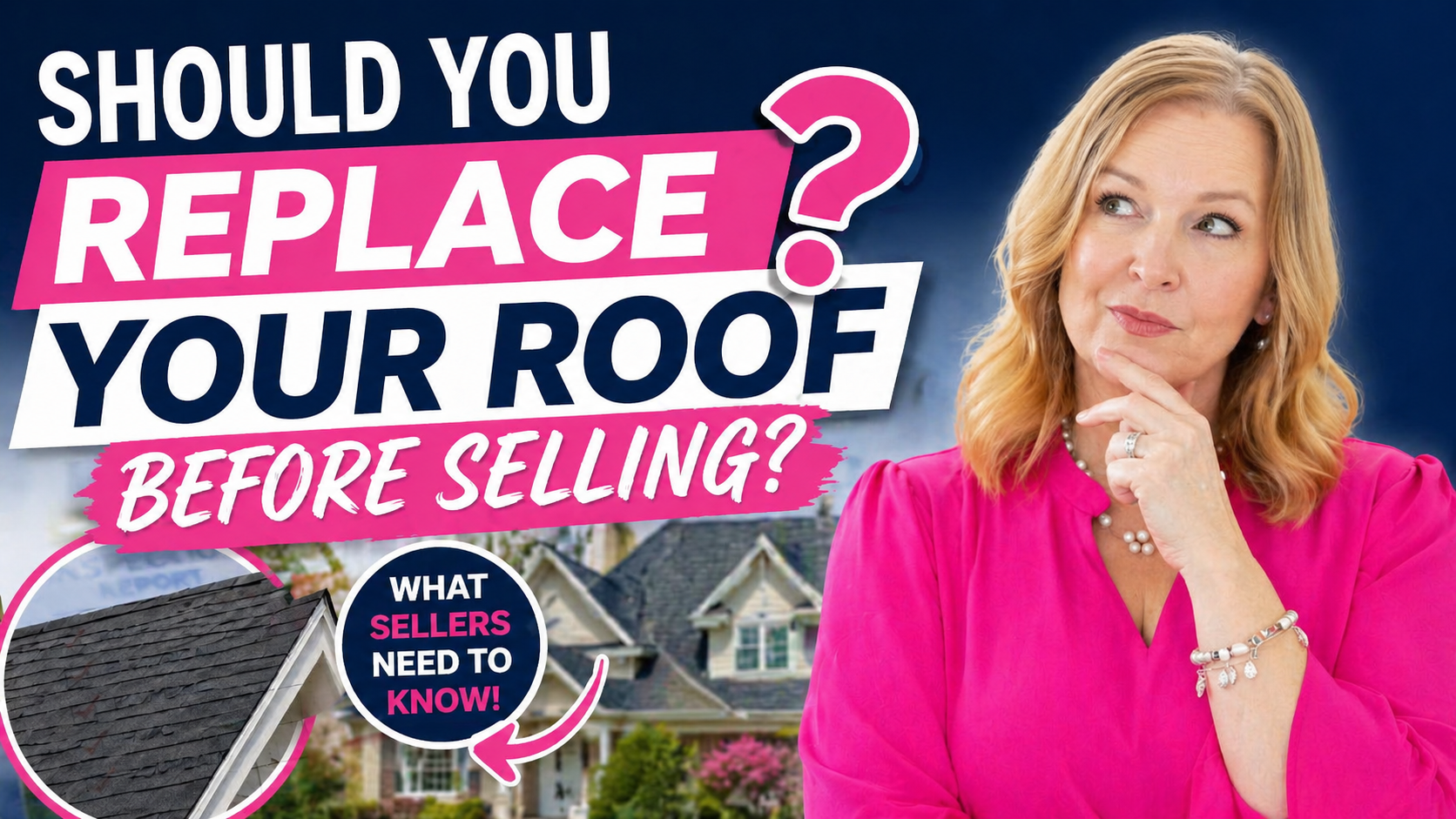
Should you replace your roof before selling your home in Northern Virginia? Sometimes yes — even when there's nothing wrong with it. Insurance companies have quietly changed the rules, and sellers who don't know this are getting blindsided weeks before closing.
For most of my career, my answer to the roof question was pretty straightforward: if it's not leaking, if it looks fine, if it still has years of life left — let's sell the house and deal with any buyer concerns at the negotiating table. A credit, maybe. A repair for a specific issue, sure. But replace an entire roof that's functioning perfectly? I wasn't quick to recommend that.
That thinking has shifted. Not because the math on roofs suddenly got better, but because something changed that sellers in Gainesville, Bristow, Haymarket, and across Western Prince William County may not realize is happening: insurance underwriters are getting increasingly aggressive about roof age, and it's killing deals.
Here's what we're seeing more and more across Northern Virginia. Insurance companies are becoming hesitant — or outright refusing — to write new policies on homes with roofs approaching 15 to 20 years old. Not because the roof is damaged. Not because there's evidence of a leak or missing shingles. Simply because of age and the risk tolerance of the underwriter.
This matters for sellers because of one chain reaction. If a buyer can't get homeowner's insurance, they can't get a mortgage. And if they can't get a mortgage, your deal falls apart — often weeks after you've already been under contract.
Let me give you a real example. Last summer, I had buyers go under contract in July with an October closing date because the sellers were waiting on their own new home to close. My buyers did everything right — they shopped for insurance within the seven-day window the contract required, locked in a policy, and moved forward. Then, about two weeks before closing, the insurance company called. The underwriter had reviewed the risk and decided they were no longer willing to write the policy because of the age of the roof. Same house. Same roof. Same condition as the day they went under contract. Nothing had changed except someone's internal risk calculation.
Luckily, we were able to make some calls and find coverage through another carrier. But it came with a higher deductible, more stress, and last-minute scrambling that could have easily tanked the transaction. That outcome is not guaranteed for every seller in that situation.
This is why my pre-listing conversations about roofs sound different than they did a few years ago. It's not about squeezing more value out of a new roof on the appraisal. It's about removing a landmine that could blow up your sale after you've already emotionally moved on and started planning your next chapter.
The worst-case scenario looks like this: you list your home, get an offer, sail through inspection and appraisal, and then — weeks later — your buyer's insurance falls through because of roof age. You're back on the market with a stigma. Every future buyer asks why the deal fell through. And now you're replacing the roof anyway, just under worse circumstances.
So when does replacing your roof before selling actually make sense? Here's how I think about it now. If your roof is approaching 15 to 20 years old, if you genuinely don't know when it was last replaced, or if you've had major storms, hail events, or high winds in your area in recent years — it's worth having a conversation before you list. Not necessarily with a contractor first. With your agent first.
A newer roof doesn't dramatically increase your sale price on its own, but it does make your home easier to insure, gives buyers more confidence, and reduces the chance of a last-minute surprise. In a market where buyers are already cautious and scrutinizing every detail, removing a potential objection before it becomes one is a legitimate strategy.
Before you start calling roofers, here's the practical path I recommend. First, find out the age of your roof — a lot of sellers honestly don't know, and that's fine. Check your home improvement records, ask your HOA if applicable, or look at your original purchase documents. Second, have a reputable roofer do a condition assessment. They can give you a realistic picture of remaining lifespan and whether repairs could extend it. Third — and this is the part that matters most — have this conversation with your agent before the listing hits the market, not after a deal is already under contract.
A roof credit can still be the right answer sometimes. There's no blanket rule. But the decision should be based on your specific roof, the current insurance environment in your price range, and your timeline — not on what worked three years ago.
I've been helping sellers prepare and list in Gainesville, Haymarket, Bristow, Manassas, and across Western Prince William County since 2005. The sellers who navigate this market smoothly are the ones who surface the hard questions early. Roofs are one of them.
Frequently Asked Questions
Will an old roof prevent my home from selling in Northern Virginia?
Not necessarily, but it can complicate the process significantly. If your roof is 15 or more years old, some insurance companies may refuse to write a new policy for the buyer — and without insurance, the buyer can't close on a conventional or FHA loan. Addressing the roof before listing removes this risk entirely.
Is it better to replace the roof or offer a credit to the buyer?
It depends on the age and condition of the roof, your price point, and how quickly you need to sell. A credit can work, but only if the buyer is able to secure insurance in the first place. If underwriters in your area are flagging roofs of your age, a credit may not be enough to save the deal. This is exactly the kind of thing to discuss with your listing agent before you hit the market.
How do I find out how old my roof is before I sell my Gainesville or Haymarket home?
Check your closing documents from when you purchased the home — the seller's disclosure often lists the roof age. Home improvement records, permits pulled through Prince William County, and receipts from contractors are also good sources. If you're unsure, a reputable roofing contractor can usually estimate age from the condition and materials during a quick inspection.
If you're thinking about selling your home in Gainesville, Haymarket, Bristow, or anywhere in Western Prince William County and you're not sure whether your roof could become a problem, let's talk before it becomes one. Reach out to schedule a free home value review — I'm happy to walk through your specific situation and help you avoid surprises that cost you time, money, or a buyer.
Karyl Allen | REALTOR® | Western Prince William Living
westernprincewilliamliving.com