


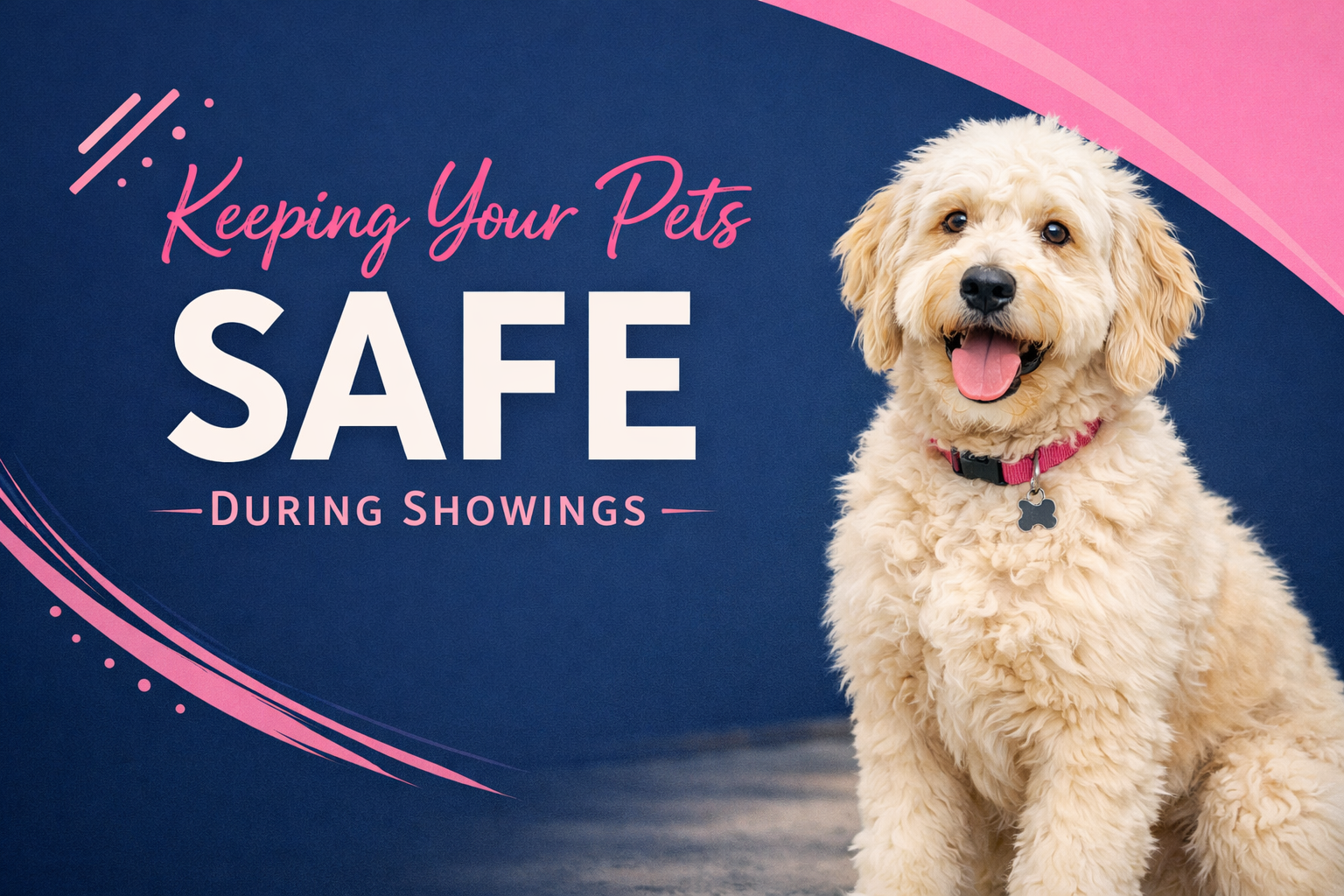
Selling Your Home With Pets in Northern Virginia? Here's How to Protect Them — and Your Home's Value
If you're getting ready to sell your home in Northern Virginia, there's one topic that comes up almost every time I sit down with a seller — and that's what to do with the pets.
Our pets are family. But when it comes to preparing your home for sale, there are some very specific things you'll want to do to protect your animals, protect your home's value, and protect the experience for buyers walking through your door.
This is something I take seriously with every listing — because if something happened to your pet during a showing, I'd be devastated right along with you.
So let's talk about how to do this right.
The Numbers Don't Lie: Pets Are Shaping the Housing Market
According to the National Association of Realtors, 71% of U.S. households had a pet as of 2023 — compared to only 40% of households with children. Pet ownership has jumped significantly from 56% back in 1988, and it's reshaping what buyers are looking for in a home.
Here in Northern Virginia, I see it constantly. Buyers are prioritizing fenced backyards, pet-friendly flooring, proximity to dog parks and walking trails, and easy access to doggy daycares. If your home has these features, that's a selling point — and we're going to highlight every one of them.
But here's the flip side: while many buyers love animals, they typically love their own animals. They don't want to hear yours barking or smell evidence of pets when they're touring your home. And they will absolutely be looking for scratched floors, snagged carpet, and chewed trim — because those things tell them the home hasn't been well maintained.
Remove Your Pets for Every Showing — No Exceptions
This is the single most important thing you can do. If a buyer or their agent hears a dog barking on the other side of the door — even for a scheduled showing — there's a real chance they won't come in at all.
When your home is on the market, strangers are coming in and out, doors are being left open, and your pet's routine is being disrupted constantly. That's stressful for everyone — including your animal.
My strong recommendation is to arrange one of the following for every showing:
- Doggy daycare (a great solution for anxious dogs)
- A trusted neighbor or friend who can take your pet
- Taking your dog or cat with you in the car while the showing is happening
For cats, a carrier or being enclosed in one room often works fine. Birds, snakes, and aquariums should be kept in a single area of the home so they're not a distraction in every room.
I do not recommend leaving dogs in crates during showings. Not only is it uncomfortable for the animal — especially anxious dogs — but if a child walks up to the crate and gets bit, that is a serious problem for everyone involved.
We've also had pets slip out of doors during showings. It happens. It's stressful for the owner, the buyers, and the agent. Avoid the risk entirely by getting your pet out of the home.
(And yes — I've seen agents accidentally let in a neighbor's cat and cause complete chaos. Sellers have come home to a cat they didn't recognize. These things really do happen.)
Minimize All Evidence of Pets for Photos and Showings
Before we take listing photos — and before every showing — you'll want to remove or put away:
- Food and water bowls
- Litter boxes
- Bird cages and pet toys
- Leashes, crates, and pet beds
- Any pet-related signage or décor
Why does this matter? Because some buyers will scroll through your photos and eliminate your home from consideration simply because they see a litter box — they'll assume the house smells, even if it doesn't. We don't want to give them a reason to skip past you.
Before you go on the market, you'll also want to do a deep clean: vacuum and mop thoroughly, wash all pet bedding, and wipe down walls and baseboards. Pet hair and dander hide in places you stop noticing after a while — buyers will notice.
Repair Pet Damage Before You List
Buyers are going to look for evidence that pets have damaged your home. Walk through with fresh eyes and address:
- Scratched doors or door frames
- Chewed trim or baseboards
- Scratched hardwood or LVP flooring
- Snags or stains in carpet
These repairs don't have to be expensive, but they matter. Buyers use visible pet damage as leverage — either to negotiate your price down or to walk away entirely. You can read more about smart prep decisions in the Seller Guide for Northern Virginia Homeowners.
And when it comes to home improvements that pay off, replacing worn flooring is often at the top of the list.
A Note on Scent: Less Is More
Please don't try to mask pet odors with heavy plugins or air fresheners. An overpowering scent is almost as off-putting as a pet odor — and buyers know immediately that you're covering something up.
What actually works: deep cleaning, fresh air, and a very light touch of scent. I'm talking one light spray of a citrus or warm vanilla scent for the entire home — not one spray per room. Then leave. You want your home to smell clean and fresh, not like a candle store.
Highlight Your Home's Pet-Friendly Features
Here's where things shift in your favor. While we're minimizing the sight, sound, and smell of your pets, we also want to make sure buyers understand that your home is ready for their animals too.
If you're considering a flooring upgrade before listing, luxury vinyl plank (LVP) is my top recommendation. It's waterproof, scratch-resistant, easy to clean, and incredibly popular with pet owners and non-pet owners alike. Carpet traps hair and odors; hardwood scratches and warps. LVP is the smarter choice for resale.
Other features we'll highlight in your listing if you have them:
- Fenced backyard (this is huge for buyers in Northern Virginia)
- Pet door with modern magnetic or chip-activated opener
- Built-in feeding stations or mudroom pet wash sink
- Tucked-away spots for crates or litter boxes
- Synthetic grass in the backyard (it looks incredibly real these days and holds up beautifully)
You can even leave a list on your kitchen counter with nearby dog parks, walking trails, pet-friendly restaurants, groomers, and vet clinics. Buyers love that kind of local detail — and it's a great way to showcase the lifestyle that comes with your home and neighborhood.
If you're in Gainesville, Haymarket, or Bristow, you already have excellent access to parks and trails — and that's absolutely worth mentioning in your listing.
A Quick Word on HOAs and Pet-Related Changes
If you've made any exterior changes to accommodate your pets — a fence, a pet door, a shed, synthetic grass — make sure those were properly approved by your HOA before you list. Unapproved modifications come up during the resale inspection and can slow down your closing.
I covered this in detail in another post: Selling Your Home in an HOA in Gainesville or Bristow, VA? Read This First.
The Goal: Minimize the Pets, Maximize the Home
Here's the bottom line. Our goal is to minimize the sight, sound, and smell of your pets during the sale process — while still making sure buyers know your home is a great place for their own animals.
Because here's a fun fact: if a buyer doesn't have a pet right now, there's a good chance they're getting one shortly after they move in. Pet-friendly features sell homes.
I've been selling homes in Prince William County since 2005, and I've helped hundreds of families — and their pets — through this process. We'll get your home ready, keep your animals safe, and get it sold for top dollar.
Curious what your home might be worth in today's market? Browse current listings in Gainesville, Haymarket, Bristow, or Manassas to get a sense of what's moving. And if you're ready to talk, reach out — you don't have to have everything figured out first.
Let's keep your pets safe and get your home sold.