Area Real Estate News & Market Trends

You’ll find our blog to be a wealth of information, covering everything from local market statistics and home values to community happenings. That’s because we care about the community and want to help you find your place in it. Please reach out if you have any questions at all. We’d love to talk with you!

May 22, 2026

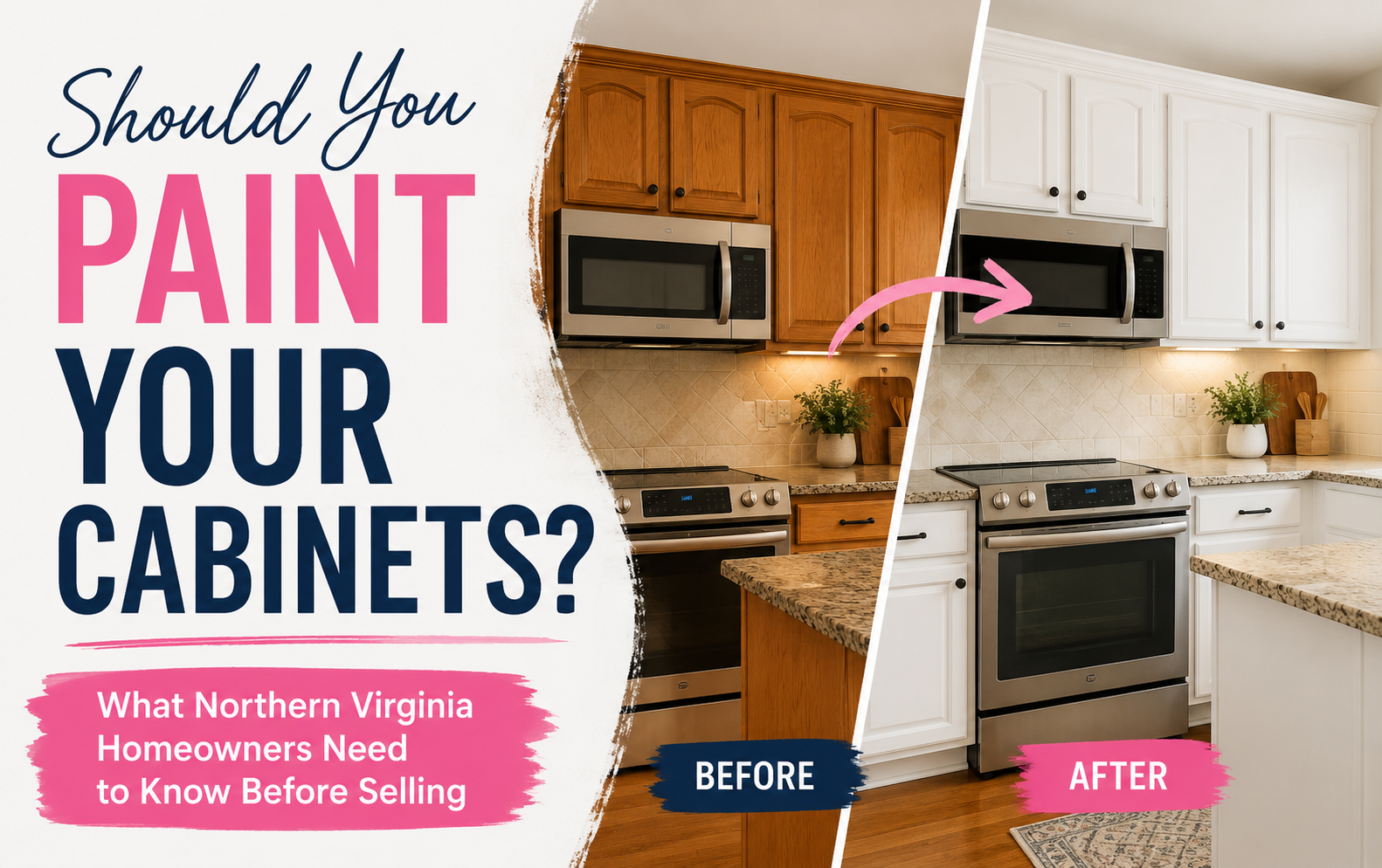
Should You Paint Your Kitchen Cabinets Before Selling?

Should You Paint Your Kitchen Cabinets Before Selling Your Home?

Should you paint your kitchen cabinets before listing your home? It depends on the condition of your home, not the color of your cabinets. Sellers in Gainesville, Haymarket, and across Western Prince William County get the best return when updates match their home's actual needs, not their emotions.

I painted my cabinets a few years ago. What started as a simple refresh turned into a full renovation I never planned.

Fresh walls went up throughout the house. Everything looked crisp and clean. Then my painter walked me into the kitchen, looked at the cabinets, and said, "Oh, Ms. Karyl… you see these? We need to paint them." He was right. The bright new walls made the wood cabinets look tired and worn by comparison. So we painted them white.

They looked great. For about ten minutes.

Then the countertops looked awful next to the white cabinets. So we replaced those. New counters absolutely needed a subway tile backsplash, so we added that too. It was a textbook "If You Give a Mouse a Cookie" renovation — one thing led to another, and I spent significantly more than I originally planned.

I'm happy with the outcome. But I want you making this decision more strategically than I did. If you're getting ready to sell your home, the question isn't really about cabinet color. It's about where your money does the most work.

My 3-Tier Strategy for Pre-Sale Updates

Before you pick up a paintbrush or call a contractor, step back and figure out which tier your home falls into. Your tier determines whether painting cabinets is a smart move — or a costly distraction. This same framework is something I walk through in my Northern Virginia Seller Guide for every home I list.

Tier 1: Mechanicals First

This is the home where the roof is aging, the HVAC is getting up there in years, or deferred maintenance has been quietly accumulating. Maybe there's a moisture issue, worn systems, or things that simply aren't functioning the way they should.

If this is your house, cabinet paint is not your priority.

Buyers in Gainesville and across Western Prince William County are asking one core question before they fall in love with your kitchen: Is this house solid? A fresh white cabinet job does not answer that question. In fact, it can create what I call a distraction upgrade — the house looks pretty on the surface, but the real concerns are still there. Buyers and their home inspectors will find them.

Fix the mechanicals first. Always.

Tier 2: The Smart Refresh

This is the sweet spot — and where most of my sellers land.

The house is solid. Mechanicals are in good shape. No major deferred maintenance. It's just… dated. The bones are good, but the finishes are showing their age.

This is where painting cabinets can absolutely make sense. You're not hiding problems — you're enhancing a good foundation. Painting is significantly less expensive than full cabinet replacement, and in the right home, it makes a real visual impact.

But go in with a plan. My own kitchen is proof of what happens when you don't. Once the cabinets changed, everything around them shifted too. If you're doing a Smart Refresh, map out the whole kitchen before you start — cabinets, hardware, counters, backsplash — so you're making strategic decisions, not reactive ones.

Tier 3: The Full Polish

This is the home that's already updated. Newer systems, modern finishes, no obvious projects staring buyers in the face.

In this tier, painting cabinets may not move the needle much. You're unlikely to recoup dollar-for-dollar on a cabinet paint job if the kitchen already reads as current. Homes in this category tend to sell faster and command stronger prices — but that's because of the total package, not because of one update. Even here, you rarely recoup 100% of renovation costs.

If you're unsure which tier you're in, my Pre-Photography Checklist is a good starting point for walking your home with fresh eyes before we talk.

A Warning About White Laminate Cabinets

If you have white cabinets from the late 1990s or early 2000s, read this carefully — I may be talking directly to you.

Many of those cabinets are laminate over fiberboard, not solid wood. Fiberboard swells when it gets wet — from splashes near the sink, steam from the dishwasher, or moisture sitting along the bottom edges. Once laminate starts peeling and the fiberboard underneath begins to swell, you cannot sand and refinish it the way you can with wood. At that point, you're looking at replacing cabinet doors or entire sections of cabinetry, and that gets expensive quickly.

The best thing you can do right now is prevent it. Wipe up water near the sink. Wipe cabinet faces near the dishwasher after it runs. Don't let moisture sit along the bottom edges. Small habits, big protection.

Can laminate cabinets be painted? Yes — with the right prep and the right professionals, laminate can look beautiful. But the structure underneath has to be intact. Once the fiberboard has swollen, you're in replacement territory, not refresh territory.

If You Do Decide to Paint

If you've landed in the Smart Refresh tier and painting makes sense, please hire professionals. Cabinet painting is not wall painting. The finish needs to look factory smooth — brush strokes and drips are visible on cabinets in a way they simply aren't on walls.

A poor cabinet paint job chips quickly and can actually work against you when buyers walk through. A professional finish that holds up through showings is the standard you're aiming for.

From my own experience: even professionally painted cabinets require some maintenance over time. Mine are starting to show a little wear around the handles — that's normal. But it was still significantly less expensive than full replacement, and they still read as clean and updated to buyers.

Want to see how the kitchen fits into the bigger picture? Read my post on the 3 rooms that matter most to buyers in Northern Virginia, and what sellers should fix before listing in 2026.

Frequently Asked Questions

Does painting kitchen cabinets increase home value?

It can — but only in the right context. If your home is structurally sound and just dated, a professional cabinet paint job can meaningfully improve a buyer's first impression. It rarely produces a dollar-for-dollar return, but it can help your home compete and sell faster, particularly in markets like Gainesville and Haymarket where buyers have high expectations.

What color should I paint my cabinets before selling my home in Northern Virginia?

White and soft off-white tones remain the most broadly appealing choices in Western Prince William County. They photograph well, feel clean and updated, and don't polarize buyers. If you're considering a two-tone look, keep the upper cabinets light and consult with a professional before committing to anything trendy.

How much does it cost to have kitchen cabinets professionally painted in Northern Virginia?

Costs vary significantly based on kitchen size, number of doors and drawers, cabinet condition, and finish quality. Get at least two estimates from professionals who specialize in cabinet refinishing — not general painters. The difference in finish quality is significant, and a poor result can actually hurt you with buyers.

Not Sure Which Tier You're In?

Send me a picture of your kitchen — or better yet, let's walk through it together. I can tell you quickly what I'd prioritize to protect your equity and position your home competitively in Gainesville, Bristow, Haymarket, or anywhere across Western Prince William County.

The goal isn't just to update your house. It's to update it intentionally. Reach out here to get started.

Karyl Allen | REALTOR® | Western Prince William Living | Licensed since 2005
May 13, 2026

Why Your Home in Northern Virginia Isn't Selling (Even If It’s Getting Showings)

If your home has been on the market and you’re getting showings but no offers, it can be incredibly frustrating.

Most sellers assume that if buyers are coming through the door, an offer should follow shortly after. But in today’s market, that’s just not how it’s working.

What I’m seeing right now is a lot of homes getting attention—but not getting offers. And when that happens, it almost always comes back to three things:

👉 Pricing, Presentation, and Promotion


Promotion Gets Buyers in the Door

The first step is making sure buyers actually see your home.

If your home is being marketed correctly, it should be:

  • Showing up online
  • Getting views
  • Generating showings

And in most cases, if you’re getting consistent showings, promotion is not the problem. The marketing is doing its job. Buyers are finding your home and they’re interested enough to come take a look.

So if people are walking through your house, we can usually rule this out.


Presentation Shapes the First Impression

Once buyers are inside, presentation becomes the next factor.

This is where things like:

  • Condition
  • Cleanliness
  • Updates
  • Layout and flow

start to matter more.

Buyers today are more selective than they were just a few months ago. If something feels off—whether it’s outdated, cluttered, or just not showing well—it can impact how they perceive the home.

That said, presentation alone usually isn’t what stops a buyer from making an offer.


Price Is What Makes Them Say Yes (or No)

This is where it really comes down to.

A buyer walks through your home and, whether they realize it or not, they’re asking themselves:

👉 “Does this feel worth the price?”

If the answer is no, they’re not writing an offer.

It doesn’t matter:

  • How many showings you had
  • How good the photos looked
  • How much interest there seemed to be

If the price doesn’t match what buyers are seeing, they will move on.


What Showings Without Offers Really Mean

When a home is getting showings but no offers, it’s usually a clear signal.

It means:

  • Buyers are interested enough to look
  • But not interested enough to act

And that gap almost always comes down to price.

I’ve seen this firsthand. Homes with strong showing activity that would have easily had multiple offers just a few months ago are now sitting, even with 20 or 30 showings.

That doesn’t mean something is “wrong” with the house.

It means the price and the product aren’t lining up in the buyer’s mind.


The Market Has Changed—Buyer Behavior Has Too

Not long ago, buyers were:

  • Making fast decisions
  • Competing aggressively
  • Stretching on price

Now, they’re:

  • Slower
  • More cautious
  • More value-driven

They’re comparing your home to everything else available—and if something feels overpriced, they’re simply moving on.


The Bottom Line

If your home isn’t selling, even though it’s getting showings, it’s almost always a combination of pricing, presentation, and promotion.

But if your marketing is working and your home shows well, then the issue is usually clear:

👉 It’s the price.

And the longer it takes to adjust, the more momentum you lose in the market.


Thinking About Selling—or Already Listed?

If you’re not sure how your home is positioned, or why it’s not getting offers, it’s worth taking a closer look at all three factors—especially pricing.

I’m always happy to give you an honest assessment and help you figure out what’s going to get your home sold in today’s market.


Karyl Allen
📞 703-297-1278
🌐 www.WesternPrinceWilliamLiving.com

May 6, 2026

Should You Accept the First Offer on Your NOVA Home?

One of the most common questions I get from sellers is whether they should accept the first offer that comes in or hold out for something better.

There’s a natural instinct to wait. A lot of sellers feel like if one offer comes in, more must be coming. Or that if they just give it a little more time, they might get a higher price or better terms.

But in today’s market—and honestly, in most markets—that first offer is often the best one you’re going to see.


Why the First Offer Is Usually the Strongest

When your home first hits the market, that’s when it gets the most attention.

If your home is positioned correctly using the three things that matter most—pricing, presentation, and promotion—buyers are going to notice it right away.

The buyers who come through early are typically:

  • Watching the market closely
  • Ready to make a move
  • Emotionally invested in finding the right home

So when they see something that checks their boxes and feels like a good value, they act quickly.

That’s where your strongest offers usually come from.


The First 7–10 Days Tell You Everything

There’s a window of time when your home is “new” to the market, and that window is incredibly important.

That’s when:

  • Showings are highest
  • Online activity is strongest
  • Buyers feel the most urgency

If your home is priced right and presented well, that early activity usually leads to an offer.

In fact, in our Northern Virginia market, if a home isn’t under contract within the first 7 to 10 days, it’s often a sign that something is off—and most of the time, it comes back to price.

It doesn’t necessarily mean there’s anything wrong with the home. It just means that when buyers compare what they’re seeing to what you’re asking, it’s not lining up as the best value.


Waiting Can Cost You Momentum

It’s easy to assume that waiting will bring something better, but that’s not usually how it plays out.

Once you move past that initial window, the dynamic starts to shift. Buyers begin to wonder why the home is still available, and the sense of urgency disappears.

Even if you continue to get showings, those buyers are often more cautious. They’re not the ones who felt compelled to act right away—they’re the ones who are taking their time or looking for a deal.

So if you pass on a strong first offer, you risk losing:

  • Your most motivated buyer
  • The momentum of your listing
  • Your strongest negotiating position

It Still Comes Back to the 3 P’s

Every listing comes down to pricing, presentation, and promotion.

If your home is being marketed well, you’ll get online views and showings. That tells us promotion is working.

Once buyers walk through, presentation comes into play—how the home shows, how it feels, and how it compares to others they’ve seen.

But at the end of the day, buyers are always asking themselves one question:

👉 “Does this home feel worth the price?”

If the answer is yes, they’ll write an offer—and often, they’ll do it quickly.

If the answer is no, they’ll wait or move on.


Not All Offers Are Equal—But the First One Matters

This doesn’t mean you should accept the first offer no matter what.

You still want to look at:

  • Price
  • Terms
  • Financing strength
  • Contingencies

But if that first offer is solid—especially if it comes in early, is well-structured, and reflects the current market—it deserves serious consideration.

Because that buyer is telling you something important: your home, at that price, makes sense to them.


The Bottom Line

If your home is priced correctly and shows well, the first offer you receive is often your best opportunity.

And if you don’t see an offer within that first 7 to 10 days, the market is usually giving you feedback that the price needs to be adjusted.

The longer you wait to respond to that feedback, the more momentum you lose.


Thinking About Selling?

If you’re getting ready to list your home, having a clear strategy for pricing—and knowing how to evaluate that first offer—can make a big difference in your final outcome.

I’m always happy to walk through what to expect and help you make the best decision when that offer comes in.

Karyl Allen
📞 703-297-1278
🌐 www.WesternPrinceWilliamLiving.com

Posted in Selling a Home
April 28, 2026

Should You Sell Now or Wait? Why Today’s Market Northern Virginia Looks Different Than 3 Months Ago

Should You Sell Your Home Now or Wait? What Changed in the Last 3 Months

If you’ve been thinking about selling your home, you’re probably wondering whether now is the right time or if it makes more sense to wait and see what happens with the market. It’s a question I’m getting more often lately, and honestly, the reason is because things feel different right now—and they are.


What Changed in the Last 3 Months

This isn’t just about comparing today’s market to last year. The shift has happened much more recently than that.

From January through March, every one of my listings had multiple offers. It was a very active and competitive environment, and there was a level of consistency in how homes were selling. Since April 1, that’s changed. Homes are still getting showings, but those showings are not converting into offers as easily, and buyers are taking more time before making decisions.


Why Sellers Are Feeling Confused Right Now

A lot of sellers are still expecting the market we had earlier this year. They’re assuming that if their home gets a lot of showings, it will automatically lead to multiple offers and strong terms. That’s just not happening as consistently anymore, especially in higher price ranges.

I recently had an $800,000 listing with 29 showings that resulted in only two offers. I also have a property on 10 acres that has had over 20 showings with no offers. A few months ago, both of those situations likely would have played out very differently. In fact, I expected the 10-acre property to have multiple offers and escalate in the first weekend. I am shocked that it has not sold yet. 

I spent today and yesterday calling agents who have listings that are comparable to my listings right now. The general consensus among all of us is "what is going on? This market is WEIRD". 


Pricing Has Become More Important Than Ever

Because of this shift, pricing strategy matters even more now. Pricing at or above what you think the market might support is not working in most cases. Buyers have more options and are taking a more cautious approach, so if your home doesn’t stand out as a clear value, they tend to move on.

The homes that are selling are the ones that are priced slightly under market, prepared well, and positioned competitively from the beginning—especially if there are other homes available in the same neighborhood.


Are Homes Still Selling?

Homes are absolutely still selling, but the results are more dependent on price point and location.

Homes under $900,000 can still see strong activity and sometimes multiple offers, but even that is very location specific. Areas like Fairfax and Loudoun are moving a bit faster, while Prince William and Fauquier are seeing more hesitation from buyers. That’s why it’s important to look at your specific area rather than relying on general market headlines.


Should You Sell Now or Wait?

The answer to this question really depends more on your situation than the market itself.

If you are going through a life change—whether that’s marriage, a growing family, a divorce, a death in the family, or a job relocation—then it usually makes sense to move forward. Those situations create a need for different housing, and waiting doesn’t necessarily improve the outcome.

If you don’t need to sell and you’re hoping for stronger conditions like we saw earlier this year, you may decide to wait. Just keep in mind that there’s no guarantee the market will shift back quickly, and timing it perfectly is difficult.


What This Means for Downsizing Sellers

For downsizing and 55+ sellers, the buyer pool tends to be smaller, but many of those buyers are coming in with cash, which can make transactions smoother. Even so, the same principles apply. Pricing correctly and preparing the home well are still the most important factors.


The Bottom Line

If you asked me today whether you should sell now or wait, I would tell you to sell now, but to go into the process with realistic expectations. This is still a strong market overall, but it is not the same market we saw even a few months ago. You should expect some level of negotiation and understand that multiple offers are no longer guaranteed.


Thinking About Selling?

If you’re trying to decide what makes sense for your situation, the best place to start is by looking at your home specifically and talking through a strategy based on today’s market conditions. I’m always happy to help you do that and give you a clear picture of what to expect.

Karyl Allen
📞 703-297-1278
🌐 www.WesternPrinceWilliamLiving.com

April 17, 2026

Selling a Home With Solar Panels: What Northern Virginia Sellers Need to Know

If you have solar panels on your home and you’re thinking about selling, you may be wondering whether they’re going to help or hurt your sale.

It’s a fair question, especially because there’s a lot of general information out there that makes it sound like solar panels automatically add value. In reality, what I’m seeing here in Northern Virginia is a little more complicated than that.


Do Solar Panels Increase Your Home’s Value?

In our market, the short answer is no.

Solar panels do not automatically increase the value of your home in Northern Virginia. We simply don’t have enough homes with solar for buyers to fully understand them or see the benefit. Instead of viewing them as an upgrade, many buyers see them as an unknown.

In some cases, they’re actually seen as a negative rather than a selling feature.


How Buyers Really Feel About Solar Panels

From what I’ve seen working with buyers, solar panels are not something people are getting excited about.

Most buyers tend to see them as:

  • Expensive
  • Intrusive from a visual standpoint
  • A potential issue when it comes time to repair or replace the roof

Rather than adding appeal, they often raise more questions than they answer. And when buyers feel uncertain, they tend to move on to another home that feels simpler.


The Biggest Challenge: Solar Panel Loans

The biggest issue I’m seeing right now has to do with financing—specifically when the panels are not paid off.

If there’s a loan attached to the solar panels, most buyers are not willing to take that on. The best way I can describe it is this: it’s like doing a $40,000 kitchen renovation and then asking the buyer to take over the payment after they buy the house. That’s just not something most buyers are comfortable with.

In the three homes I’ve sold with solar panels, the sellers ended up paying off the panels in order to move forward with the sale.


Transfer Issues Can Complicate the Sale

Even in situations where a buyer is willing to take on the solar loan, things don’t always go smoothly.

I’ve seen a situation where:

  • The buyer agreed to take over the payments
  • The lender approved them
  • And then the solar panel company rejected the buyer

That can create a major roadblock late in the transaction, and it’s not something most sellers anticipate going in.


HOA and Placement Limitations

Another factor that can come into play is HOA restrictions.

Some HOAs only allow solar panels on the back side of the home, which doesn’t always make sense depending on how the home is positioned. If the sun exposure is better in the front, that limitation can reduce the effectiveness of the system and make the panels feel less practical to buyers.


What Sellers With Solar Panels Should Do

If you have solar panels and you’re thinking about selling, the most important thing to understand is that they are not necessarily going to be a selling advantage in this market.

In most cases, the smoothest path forward is to:

  • Have the panels paid off before listing
  • Be prepared for buyers to have questions or concerns
  • Price the home based on the market—not factoring in added value for the panels

Going in with the right expectations can make a big difference in how smoothly your sale goes.


The Bottom Line

Solar panels are a great concept, but in Northern Virginia, they’re still not widely understood or valued by the average buyer.

That doesn’t mean you can’t sell your home—it just means you need to approach it a little differently and be prepared for how buyers are likely to respond.


Thinking About Selling?

If you have solar panels and you’re considering selling, it’s worth having a conversation upfront so you know exactly what to expect and how to position your home in today’s market.

I’m always happy to walk through your situation and help you come up with a strategy that works.


Karyl Allen
📞 703-297-1278
🌐 www.WesternPrinceWilliamLiving.com

Posted in Selling a Home
April 10, 2026

How to Handle Home Inspection Repair Requests When Selling Your Home in Northern Virginia

If you’re thinking about selling your home in Gainesville, Bristow, Manassas, or the surrounding Northern Virginia area, there’s one part of the process that can make or break your transaction:

👉 The home inspection repair request

And I’ll be honest—I don’t just dislike this part of the process… I hate it.

Why? Because inspection negotiations can derail a deal faster than anything else. But the good news is—with the right strategy, you can handle them smoothly and protect your bottom line.

Let’s break it down.


What Sellers Need to Understand About Home Inspections in Virginia

In Virginia, homes are sold “as-is”—but that doesn’t mean buyers won’t negotiate.

We’re a buyer-beware state, which means:

  • Buyers accept the home in its current condition
  • BUT they still have the right to conduct inspections

These typically include:

  • Home inspection
  • Radon test
  • Termite inspection
  • Well & septic (if applicable)

After inspections, buyers can submit:
✔ A full report
✔ A list of requested repairs or credits

And this is where things often get… complicated.


Why Inspection Requests Get So Frustrating

Many buyers treat the inspection like a second round of negotiations.

Instead of focusing on major issues, some submit:

  • Long lists of minor items
  • Cosmetic concerns
  • “What if” scenarios
  • Requests that aren’t even on the inspection report

For sellers, this can feel like death by a thousand cuts.


The Smarter Strategy: Offer Credits, Not Repairs

Here’s where experience matters—and where I guide my sellers differently.

👉 I strongly recommend negotiating credits instead of doing repairs.

Why?

1. Timing Matters

You typically have about 30 days to close.

During that time, sellers are:

  • Packing
  • Moving
  • Managing life transitions

Adding contractor scheduling and repairs creates unnecessary stress and delays.


2. Quality Control Is a Risk

Let’s be real:

  • Sellers may choose the cheapest contractor
  • Or attempt DIY fixes

And buyers?
They may not be happy with the results.

This often leads to last-minute disputes before closing—the worst time for problems.


Why Credits Work Better

When you offer a credit:
✔ The buyer chooses their own contractor
✔ The buyer controls the quality
✔ The transaction stays on track
✔ Everyone avoids unnecessary stress

It’s cleaner, faster, and far less emotional.


What’s a Reasonable Repair Request?

Not all requests are created equal.

✅ Reasonable Requests Include:

  • Active leaks
  • Roof issues
  • Electrical safety concerns
  • Termite damage
  • Failing HVAC or water heater

❌ Unreasonable Requests Include:

  • Paint touch-ups
  • Nail holes in walls
  • Loose doorknobs
  • Cosmetic items
  • “Future” replacements (like a working but older water heater)

If it’s working, it’s working.

And trying to predict failure? That’s a gray area.


A Critical Tip for Buyers (That Helps Sellers Too)

When buyers ask for everything, they often get nothing.

Overloading a seller with minor requests can backfire:

  • Sellers get frustrated
  • They may refuse everything
  • Or only agree to small, unimportant fixes

Smart negotiations focus on what actually matters.


How to Stay Ahead of Inspection Issues as a Seller

Here’s how I help my sellers stay in control:

✔ Be Transparent

If you’ve repaired something:

  • Provide receipts
  • Show maintenance records

This builds trust and reduces surprises.


✔ Keep Inspection Periods Short

In Northern Virginia, we aim for:
👉 7–10 day inspection periods

This prevents:

  • Delays
  • Last-minute surprise requests

✔ Focus on Credits First

If a major issue comes up:

  • Negotiate a price reduction or
  • Offer a closing cost credit

This keeps everything moving forward smoothly.


A Real Story (And Why This Matters)

I had a transaction in Bristow where:

  • Buyers refused a credit
  • Insisted on repairs

The sellers:
✔ Completed everything professionally

But during the final walkthrough?

The buyers:

  • Didn’t like the paint match
  • Didn’t like the faucet
  • Complained about caulking

👉 Result: A standoff just 2 days before closing

All of it could have been avoided with a simple credit.


The Bottom Line for Sellers

If you’re selling your home in Northern Virginia:

✔ Expect inspection requests
✔ Expect some emotional negotiations
✔ Don’t get overwhelmed

The key is having a strategy.

👉 Credits give buyers flexibility
👉 They reduce stress for sellers
👉 They keep your transaction moving forward

And most importantly…

👉 They help you avoid unnecessary battles over small details.


Thinking About Selling in Gainesville, Bristow, or Manassas?

I’ve been helping Northern Virginia sellers since 2005, and I know how to navigate inspection negotiations so they don’t take over your transaction.

If you’re considering selling, I’d be happy to:

  • Walk you through my process
  • Help you prepare before listing
  • Create a strategy to protect your equity


📞 703-297-1278
🌐 www.WesternPrinceWilliamLiving.com

Posted in Selling a Home
April 3, 2026

Should You Allow Dual Agency When Selling Your Home in Northern Virginia?

Should You Allow Dual Agency When Selling Your Home in Northern Virginia?

If you’re planning to sell your home in Prince William or Fauquier County, there’s one question that doesn’t get talked about enough:

👉 Should you allow dual agency?

It might sound harmless—or even convenient—but understanding how it works could have a major impact on your sale.


What Is Dual Agency?

Dual agency happens when one real estate agent represents both the seller and the buyer in the same transaction.

That means:

  • The same agent who is supposed to get you the highest price
  • Is also working with the buyer trying to get the best deal

And that’s where things get complicated.


Why Dual Agency Can Be a Problem for Sellers

On the surface, dual agency can sound efficient. One agent, one transaction, fewer moving parts.

But in reality, it creates a conflict of interest.

Here’s why:

1. You Lose Full Representation

In a traditional sale, your agent is:
✔ Advising you on pricing
✔ Negotiating aggressively on your behalf
✔ Protecting your best interests

In dual agency, the agent must remain neutral.

That means:
❌ They cannot fully advocate for you
❌ They cannot give you strategic negotiation advice the same way


2. Negotiation Becomes Limited

This is one of the biggest risks.

When the same agent represents both sides:

  • They can’t push hard for you without hurting the buyer
  • They can’t advise the buyer without affecting you

So instead of strong negotiation, you often get:
👉 A more “middle ground” approach

And that can cost you money.


3. You May Not Get the Best Price or Terms

Without strong representation, sellers may:

  • Accept weaker offers
  • Miss opportunities to negotiate better terms
  • Feel unsure about decisions during the process

Why Some Agents Encourage Dual Agency

Let’s be honest—there’s a reason this comes up.

In many cases:
👉 The agent earns both sides of the commission

So while it may be presented as “convenient,” it can also benefit the agent financially.

That doesn’t automatically make it wrong—but it does mean you should fully understand what you’re agreeing to.


Is Dual Agency Legal in Virginia?

Yes—dual agency is legal in Virginia.

However:
✔ It must be fully disclosed
✔ Both parties must consent in writing

Even with disclosure, it’s still your choice whether to allow it.


What Are Your Alternatives?

If a buyer is interested in your home and working with your listing agent, you have options:

1. Designated Representation

Sometimes brokerages can assign another agent to represent the buyer separately.

2. Buyer Gets Their Own Agent

This is often the cleanest and most protective option.


What I Recommend to My Sellers

I do not practice Dual Agency, so I will never represent a buyer on a home I am listing. My priority is always:

✔ Protecting your equity
✔ Negotiating strongly on your behalf
✔ Making sure you feel confident every step of the way


Bottom Line

Dual agency isn’t necessarily “bad”—but it does change the level of representation you receive.

Before agreeing to it, ask yourself:
👉 Am I comfortable with my agent being neutral instead of fully advocating for me?


Thinking About Selling in Gainesville, Bristow, or Manassas?

If you’re planning to sell and want clear guidance on things like pricing, strategy, and representation, I’m happy to help.

No pressure—just honest advice so you can make the best decision for your situation.

Karyl Allen
📞 703-297-1278
🌐 www.WesternPrinceWilliamLiving.com

Posted in Selling a Home
March 26, 2026

Selling Your NOVA Home as a FSBO: What You Need to Know Before You List

Selling Your NOVA Home as a FSBO: What You Need to Know Before You List

If you’re thinking about selling your home as a For Sale By Owner (FSBO), you’re not alone.

Many homeowners in Gainesville, Bristow, and across Northern Virginia consider going this route to try to save on commission. And while that can sound appealing upfront, there are a few things you should understand before you put that sign in the yard.

Because the truth is—selling your home yourself isn’t just about finding a buyer. It’s about maximizing your outcome.

Let’s walk through what most FSBO sellers don’t realize until it’s too late.


1. Pricing Your Home Is Harder Than It Looks

One of the biggest challenges FSBO sellers face is pricing.

It’s easy to look at nearby sales online and come up with a number—but pricing isn’t just about square footage and bedrooms. It’s about:

  • Timing in the current market
  • Buyer demand in your price range
  • Condition and updates compared to competing homes
  • Micro-neighborhood trends

👉 Price too high, and your home sits.
👉 Price too low, and you leave money on the table.

In today’s market, the first 1–2 weeks are critical, and getting the price right from day one makes a huge difference.


2. Exposure Matters More Than Ever

When you sell FSBO, your buyer pool is immediately smaller.

Why? Because:

  • Many buyers are working with agents
  • Your home may not get full MLS exposure
  • Marketing is often limited to Zillow, a yard sign, or social media

The homes that sell quickly and for top dollar today are getting:

  • Professional photography
  • Strategic online marketing
  • Maximum exposure to both buyers and agents

Without that reach, even a great home can sit unnoticed.


3. First Impressions Happen Online

Buyers are deciding whether to see your home in seconds—based on photos.

If your listing doesn’t stand out, you risk:

  • Fewer showings
  • Lower perceived value
  • Longer time on market

Simple things like decluttering, lighting, and staging can make a major difference—but many FSBO sellers underestimate how important presentation really is.


4. Negotiation Is Where Deals Are Won (or Lost)

Getting an offer is one thing.
Navigating it is something else entirely.

As a FSBO seller, you’ll be handling:

  • Offer price and terms
  • Contingencies (inspection, financing, appraisal)
  • Repair negotiations
  • Contract timelines and deadlines

This is where many sellers unknowingly give up money—or worse, lose the deal altogether.


5. There Are Legal and Contractual Risks

Selling a home involves more than just agreeing on a price.

There are:

  • State-required disclosures
  • Contract obligations
  • Deadlines that must be met
  • Potential liability if something is missed

Even small mistakes can lead to delays, disputes, or legal issues.


6. FSBO Homes Often Net Less—Even After Saving Commission

This is the part many sellers don’t expect.

While the goal of FSBO is to save money, studies and real-world experience consistently show that homes sold with professional representation often net more overall due to:

  • Better pricing strategy
  • Stronger marketing
  • Skilled negotiation
  • Wider exposure

So while you may save on commission, you could be leaving significantly more on the table in your final sale price.


Final Thoughts

Selling your home yourself can be done—but it’s not as simple as it looks from the outside.

If your goal is to:

  • Sell quickly
  • Maximize your profit
  • Minimize stress

Then having the right strategy (and the right guidance) matters.


Thinking About Selling? Let’s Talk First

Even if you’re considering FSBO, I’m happy to be a resource.

I can give you:

  • A realistic price range for your home
  • Tips to prepare it for the market
  • Insight into what buyers in Gainesville and Bristow are looking for right now

No pressure—just helpful information so you can make the best decision for your situation.


📞 703-297-1278
🌐 www.WesternPrinceWilliamLiving.com

Posted in Selling a Home
March 20, 2026

Preparing Your Home for a Spring Listing in Gainesville & Haymarket VA

Preparing Your Northern Virginia Home for a Spring Listing: What to Do Before You Call an Agent

Spring is the busiest season in Northern Virginia real estate — and the sellers who come out ahead aren't the ones who listed first. They're the ones who prepared.

If you're thinking about listing your Gainesville, Haymarket, or Bristow home this spring, the work you do now — before the yard signs, before the photos, before the first showing — is what separates a smooth sale from a stressful one. Here's exactly how I walk sellers through getting their home ready, and what I've seen make the biggest difference in this market.

Start Outside: Curb Appeal Sets the Tone

Buyers make up their minds in the first 30 seconds. If your front yard is overgrown, your shutters are faded, or your front door is peeling, some of them won't even get out of the car. Fortunately, curb appeal improvements don't have to be expensive. Before listing, walk your exterior with fresh eyes and address the basics: power wash the driveway, walkway, and front porch; refresh mulch in the flower beds (one of the highest-ROI moves you can make for under $200); trim shrubs and trees, especially anything blocking windows; and repaint or replace the front door if it's showing age. Bold colors like navy or black are very popular right now and photograph beautifully. If your home has brick, check the mortar. If you have siding, look for any sections that need repainting or replacement. These are the things buyers — and their inspectors — will flag.

Declutter Before You Deep Clean

I always tell sellers: don't clean a cluttered house. Declutter first, then clean. The goal is to help buyers visualize their life in your home — not yours. That means editing down personal photos, clearing countertops in the kitchen and bathrooms, paring back furniture in rooms that feel crowded, and removing anything that makes a space feel smaller or more personal than it needs to. This is also the right time to start sorting through items you plan to donate, move, or discard. In a spring market, homes move quickly — you don't want to be packing in a hurry after you're already under contract. If your garage or basement is full, consider renting a storage unit for the duration of the listing. A buyer walking through a packed garage is making mental notes about how much work this house will be. A clean, organized one feels like a bonus.

Focus Your Repair Budget on These Areas First

Sellers ask me all the time: what should I fix, and what should I leave alone? The honest answer is that it depends on your home and your price point — but there are a few areas that almost always pay off. In the kitchen and bathrooms, you don't need a full renovation. Clean grout, new cabinet hardware, updated faucets, and fresh caulk can transform these spaces for a few hundred dollars. If you have worn carpet in the main living areas, replacing it with luxury vinyl plank is one of the best investments you can make before listing — buyers love it, it's waterproof and durable, and it photographs beautifully. Fresh neutral paint throughout is almost always worth doing; skip stark white and go with warm whites or soft greiges instead. And if you have dated builder-grade light fixtures in the kitchen, dining room, or primary bath, swapping them out costs $100–$400 per fixture and has an outsized impact on how buyers perceive the home overall. For a deeper look at which improvements deliver the strongest returns in our market, take a look at my guide on which home improvements pay the most in Northern Virginia. And for a full overview of the selling process, the Seller Guide for Northern Virginia Homeowners is a great place to start.

Get Your Photos Ready — Before the Photographer Arrives

Listing photos are your first showing. Most buyers will scroll through your photos and decide whether to tour your home before they ever set foot inside. Before your listing photographer arrives, walk every room and remove trash cans and recycling bins, pet bowls and litter boxes, personal photos and excess décor, any furniture that makes a room feel tight, cords and chargers left out on countertops or nightstands, and anything on the front of the refrigerator. I always walk through with sellers before photos are scheduled — it makes a significant difference. You can read more about the photo prep process in detail here: Get Your Home Photo-Ready for Real Estate Photos.

Gather Your Documents Now — Not the Week Before Closing

One of the most stressful things sellers deal with is being asked for paperwork they can't find quickly. Get ahead of it now by ordering your HOA documents, rules, and resale package information; gather any permits pulled for work done on the home such as a finished basement, addition, deck, or fence; appliance manuals and warranties; your most recent utility bills; and any survey or plot plan you received at your original closing. If you're in a community governed by a Property Owners' Association — which covers most neighborhoods in Gainesville and Haymarket — there are specific disclosure requirements under Virginia law that I walk every seller through before we list. Read more about what's involved here: Selling Your Home With an HOA in Gainesville or Bristow, VA. And if you've made any exterior modifications — a fence, a pet door, a deck extension — make sure those were properly approved before listing. Unapproved modifications can surface during the inspection and slow things down. More on that here: Selling Your Home With an HOA: What Sellers Need to Know About Violations.

What Sellers Often Get Wrong

After years of working with sellers throughout Manassas, Gainesville, Haymarket, and the broader Prince William County area, I've noticed a few patterns in what sellers tend to get wrong. Over-improving the wrong things is one of the most common — a $70,000 kitchen renovation in a $500,000 neighborhood rarely returns its cost. Pricing based on what you need rather than what the market supports is another: here's why that's one of the costliest mistakes a seller can make. And waiting too long to start preparing is something I see constantly — sellers who call me two weeks before they want to list are always scrambling; sellers who call two months out have time to be strategic. If you're weighing whether to work with an agent at all, it's worth understanding what's actually involved before making that call: Can You Sell Your Home Without a Realtor in Northern Virginia?

The Bottom Line

The sellers who feel most confident at the closing table are the ones who started preparing before they thought they needed to. Spring in Northern Virginia moves fast. If you're thinking about listing — even if you're not certain about your timeline — let's talk now. I'll walk through your home with you, help you prioritize what actually matters, and make sure you're set up for the best possible outcome. I work with sellers throughout Gainesville, Haymarket, Bristow, Manassas, Nokesville, and the surrounding areas. Reach out and let's start the conversation.

March 3, 2026

How to Choose the Best Realtor in Prince William County to Sell Your Home

If you're getting ready to sell your home in Prince William County, one of the most important decisions you'll make isn't what color to paint the walls or whether to replace the carpet before you list. It's who you choose to represent you.

The right realtor doesn't just stick a sign in your yard and wait. They know your neighborhood, they know the buyers, they know how to price your home to attract serious offers — and they know how to negotiate to protect every dollar of your equity. The wrong one? That can cost you tens of thousands.

I've been selling homes in Prince William County since 2005. Here's what I tell every seller who asks me how to find the right agent.

600+ Homes Sold
$275M+ In Sales Volume
20+ Years in PWC

Start With Local Knowledge — Real Local Knowledge

There's a big difference between a realtor who is licensed in Virginia and a realtor who actually knows Prince William County. And I mean knows it — the neighborhoods, the price points, the HOA quirks, the school districts, the commuter patterns, what's selling fast and what's sitting.

When you're pricing a home in Gainesville, Haymarket, Bristow, or Manassas, you need someone who can walk through your door and immediately understand what sets your home apart from the one that sold two streets over last month — and why that matters for your asking price.

Hyperlocal knowledge isn't just a buzzword. It's the difference between pricing your home to sell quickly at top dollar and watching it sit on the market while buyers wonder what's wrong with it.

Look at Their Track Record — Not Just Their Bio

Every realtor has a glossy bio. What you want to see is results.

Ask about their sales volume. Ask how many homes they've sold in your specific area. Ask what their average days on market looks like compared to the county average. Ask what percentage of list price their sellers typically receive at closing.

These numbers tell you whether an agent is actually performing for their clients — or just active in the market.

Over my career, I've sold more than 600 homes representing over $275 million in sales volume right here in Northern Virginia. Those aren't just numbers — they represent real families who needed the sale to go well, and it did. You can browse featured listings or explore homes by city to see what's currently moving in your area.

Communication Is Everything — Especially in a Fast-Moving Market

Prince William County can move quickly. When a strong offer comes in, when a buyer asks for repairs after inspection, when your closing timeline shifts — you need an agent who picks up the phone. Every time.

One of the most common complaints I hear from sellers who've worked with other agents is that they felt left in the dark. They didn't know what was happening. They found out about issues at the last minute. That's not okay.

When I take on a listing, you'll always know where things stand. I believe in proactive communication — not waiting for you to chase me down. If you're curious what that process actually looks like, the Sellers page walks through how I approach each listing from day one.

Negotiation Skills Protect Your Bottom Line

Getting an offer is just the beginning. What happens next — the inspection, the appraisal, the repair requests, the contingencies — is where an experienced negotiator earns their commission.

A skilled agent knows how to evaluate repair requests and push back on unreasonable asks. They know how to handle a low appraisal without losing the deal. They know how to create leverage when you have multiple offers — and how to protect you when you don't.

I've negotiated hundreds of transactions in this market. That experience shows up in places you might not expect — and it's one of the biggest reasons my sellers consistently walk away with strong results. For a deeper look at what the full cost of selling looks like, check out this breakdown of what it really costs to sell your home in Northern Virginia.

Ask About Their Pricing Strategy

How an agent prices your home is one of the most consequential decisions of the entire sale. Price too high and you'll sit on the market, eventually chasing the price down while buyers wonder what's wrong. Price too low and you leave money on the table.

A strong agent will walk you through a detailed comparative market analysis, explain their pricing rationale clearly, and be honest with you about what the market will bear — even if it's not the number you were hoping for. That honesty is a feature, not a bug.

If you're trying to understand the current landscape before that conversation, this post on the 2026 Prince William County real estate forecast is a good place to start.

Watch Out for These Red Flags

A few things to be cautious of when interviewing agents:

  • The agent tells you exactly what you want to hear about price — without backing it up with data. This is called "buying the listing." They'll get you to sign, then push for a price reduction later. I've written about why overpriced homes sit on the market and what price really has to do with it.
  • They're vague about their marketing plan. How will your home be photographed? Where will it be listed and promoted? What's the strategy for the first week on market? You deserve clear answers. A related read: why most Northern Virginia sellers choose the MLS.
  • They're hard to reach before you've even signed. That pattern won't improve once you're under contract.

And if you're still weighing whether to use an agent at all, I'd encourage you to read this honest take on selling your home without a realtor in Northern Virginia before making that call.

The Right Questions to Ask Before You Sign

I put together a full list of questions every seller should ask before hiring a listing agent — including some that most people never think to ask until it's too late. You can find that here: 13 questions to ask a listing agent in Northern Virginia.

Print it out. Bring it to every interview. A confident, experienced agent will welcome every one of those questions.

The Right Agent Makes the Process Feel Manageable

Selling your home is one of the biggest financial transactions of your life — and it's an emotional one too. You're leaving a place that holds memories. You're trying to time a move, figure out your next home, and make sure everything lines up.

The right realtor understands that. They've been through it hundreds of times, and they know how to keep you informed, focused, and confident at every step.

That's what I've tried to build over 20 years in this business. Not just a track record of sales, but a reputation for doing right by the people who trusted me with their biggest asset. If you're also thinking about where you'll go after the sale, the Downsizing Guide for Northern Virginia Homeowners is a great companion resource.


Ready to Take the Next Step?

Download the Seller Guide for Northern Virginia Homeowners — it covers everything you need to know about preparing your home, pricing it right, and navigating the process from listing to closing.

Download the Free Seller Guide
Posted in Selling a Home